-
By Gunjan Gupta
- In Uncategorized
Have you noticed AI platforms like ChatGPT and Gemini pulling answers from websites without always crediting the source?
No, it’s not an error. It is a massive shift in how AI tools are now fetching information. LLMs or Large Language Models are rewriting the tricks to your content discovery. This is not just a simple update to the way AI tools fetch information, but a crucial development that your SEO strategy needs to adapt to.
Instead of scanning Google’s search results, people can now get direct answers from AI tools in a better, concise and summarised form.
But there is one thing you must not miss here! If your content is not being referenced in these LLM-produced answers, you may be missing out on a large chunk of potential visibility.
This is why, for current SEO strategies, understanding and implementing the concept of LLM seeding has become very important.
LLM seeding is a strategic approach to getting your content featured in AI-generated answers. LLM seeding aims to publish content in places and formats where LLMs are likely to crawl, comprehend and draw references from, and then actually refer.
This is significantly different from traditional SEO strategies or “prompt engineering”, which primarily rely on keyword ranking and placement, as well as external link building. LLM seeding is all about making your content LLM-friendly.
In this article, we will learn A to Z about the concept of LLM seeding, how it can be implemented in your SEO strategy and the steps you must take to outsmart your competitors and get your content noticed by AI tools.
Key takeaways
- LLM Seeding is a new approach that focuses on creating content in formats and platforms that Large Language Models frequently access, summarise, and refer to.
- Unlike traditional SEO, which focuses on keywords, backlinks and number of clicks, LLM seeding optimises content to achieve citations and visibility within AI-generated responses.
- Benefits of LLM seeding include increased chances of brand mentions, faster visibility for content, niche authority and skipping the ranking race.
- Best practices of LLM seeding include publication of listicles and structured content like tables, FAQs and comparison charts, semantic chunking, and multimedia layering.
- Useful platforms for LLM seeding are Medium, LinkedIn, Guest Blogs, Quora and Reddit.
- The success of LLM seeding efforts can be tracked through ChatGPT, Perplexity (for brand mentions), G4A for referral traffic insights and Serpstat, Semrush and Similarweb for AI visibility.
What exactly is LLM Seeding? Understanding the Emerging SEO Trend and AI Search Optimisation
LLM seeding is the process by which you can publish content in formats and places that LLMs like ChatGPT, Gemini and Perplexity find easy to access, comprehend and cite as references in their AI-generated answers.
Rather than trying to take the number one spot in the results pages, which has usually been a traditional SEO strategy for years now, LLM seeding entails creating a source for AI-generated answers.
Your principal aim should be to show up in the concise answers generated by these AI tools, or their recommendations and citations, even if it means not earning any clicks. While the basics of how to achieve this are still rooted in traditional SEO practices, the platform that you are targeting changes.
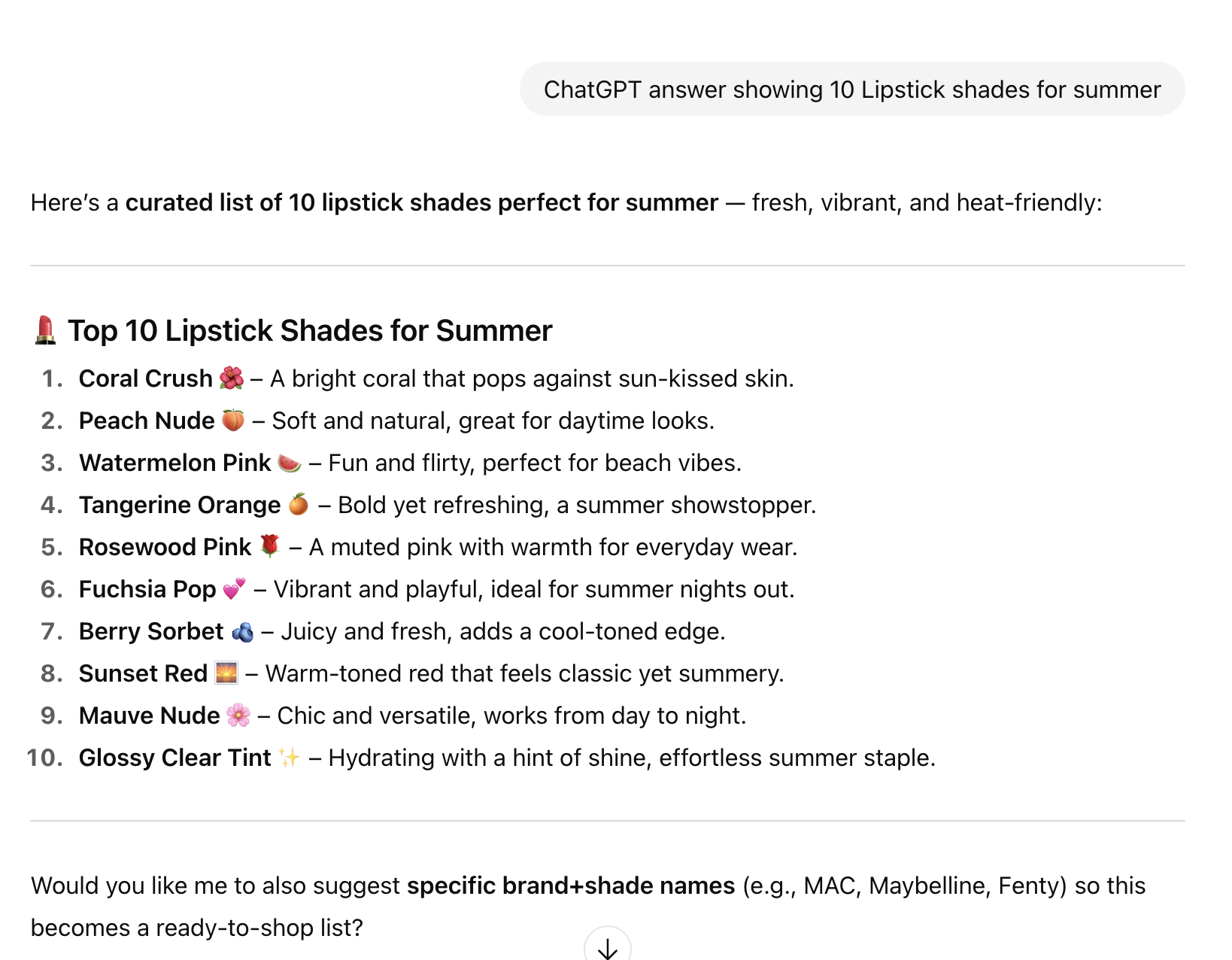 Let us take a practical example for you to grasp the concept of LLM seeding in detail. Suppose you run a company that sells makeup products, and your content team composes a post about “best lipstick shades to try out this summer.” Maybe a few weeks later, someone asks an AI platform to fetch the best lipstick shades for summer.
There is a chance your brand’s suggestions may show up in the answers summarised by AI for the users who ask for the lipsticks. This is what you need to work towards with LLM seeding.
How Does the LLM Find the Exact Products That You Have Recommended in Your Blog?
These models are usually trained on massive datasets fetched from various sources on the internet. This can include website blogs, guest posts, forums, news pages, social media posts and much more.
When someone types in the kind of question mentioned above, the model will generate a summarised response based on what it has learned from all the sources it has explored, which provide relevant and authentic information.
How Do You Ensure Your Content is Worth Referencing for the LLM?
Well-organised, categorised and clearly written content hosted in the right pages is more likely to be referenced in these answers. Hence, SEO strategists need to shift their attention now from mere keyword ranking and call to action towards a structured and concise form of content writing.
Benefits of LLM Seeding: How It Can Get You Cited in AI-Generated Answers
LLM seeding will not just give you some satisfying metrics to see for your website. It is going to create a kind of visibility that allows your content to catch viewers’ eyes even if they do not visit your website regularly.
Here are some of the key benefits of LLM seeding, which will be a game-changer for your business:
- Quick visibility to gather attention:
Models like ChatGPT, Gemini and Perplexity have now started replacing the good old traditional search trends in which the user checks multiple results to find solutions.
These models provide quick answers with important areas summarised. Thus, your content grabs the audience’s eye way before they even decide to click on your website and find the relevant page.
- Valuable brand mentions:
When users find what they are looking for and associate your brand with it without having to skim through so many webpages, they can instantly connect with your brand right from the AI answer.
- Greater authority:
Getting referenced or quoted alongside big brands allows you to create niche authority for your website, so that users can trust you as much as the big names online.
- Skip the ranking battle:
Unlike the traditional SEO race to rank at the top of the results page, LLM seeding allows your audience to focus on what they need.
This means you no longer have to think about all the competitors you need to beat, and instead focus on creating an organised, informative content flow. Nearly 90% of ChatGPT citations come from websites ranked outside Google’s top 20.
- Leverage the emerging trend:
LLM seeding is still a relatively new SEO tactic, which many websites have not started applying to its fullest potential. The quicker you start leveraging the strategy, the better your chances of gaining visibility through citations in AI answers.
Where Does AI Search Differ from the Traditional SEO Tactics?
Implementing the procedures of LLM seeding can sometimes overlap and sometimes differ from how you implement the good old results page race towards the top in traditional SEO. Here are the key differences:
| Traditional SEO | LLM Seeding |
| Traditional SEO mainly caters to reaching higher ranks on search engines and earning a greater number of clicks on your website. | You do not need to focus on the ranking battle at all when it comes to LLM seeding. The entire focus shifts to creating niche-relevant, educative and useful content that answers questions for your audience categorically. |
| Traditional SEO entails optimisation for keywords, backlink building and the improvement of page speed. | Unlike keyword ranking, link building and other traditional SEO tactics, here the focus is on clear formatting of content, proper semantic structures and authoritative solutions. |
| In traditional SEO, you work on link outreach campaigns and run keyword surveys to find out which keywords will get you top ranks and which links will get you more clicks. | With LLM seeding, you provide unique, informative insights on platforms that AI models explore frequently, like Medium, Reddit, or popular guest posting websites in your niche. |
However, an important point to remember while creating your LLM seeding checklist is that most traditional SEO strategies will still need to be implemented together.
LLM will help your content appear on AI tools, but abandoning your keyword ranking efforts and link-building campaigns entirely could lead to lower visibility for your website.
The key is to combine both methods smartly and ensure your content is strong while your rankings stay healthy.
Best Practices for LLM Seeding You Must Follow
If you want your LLM seeding efforts to deliver optimum results and bring out the best potential from your content, here are the 9 best practices to implement –
- Create “best of listicles”:
Articles that categorise products according to ranks and micro-lists, especially in topics like “best platforms to learn foreign languages” and similar others, are prioritised. Transparent and factually accurate criteria for products and services boost trust.
- Use semantic chunking:
Break your content into concise, clear and specific sections, with the help of subheadings, lists, bullet points, sh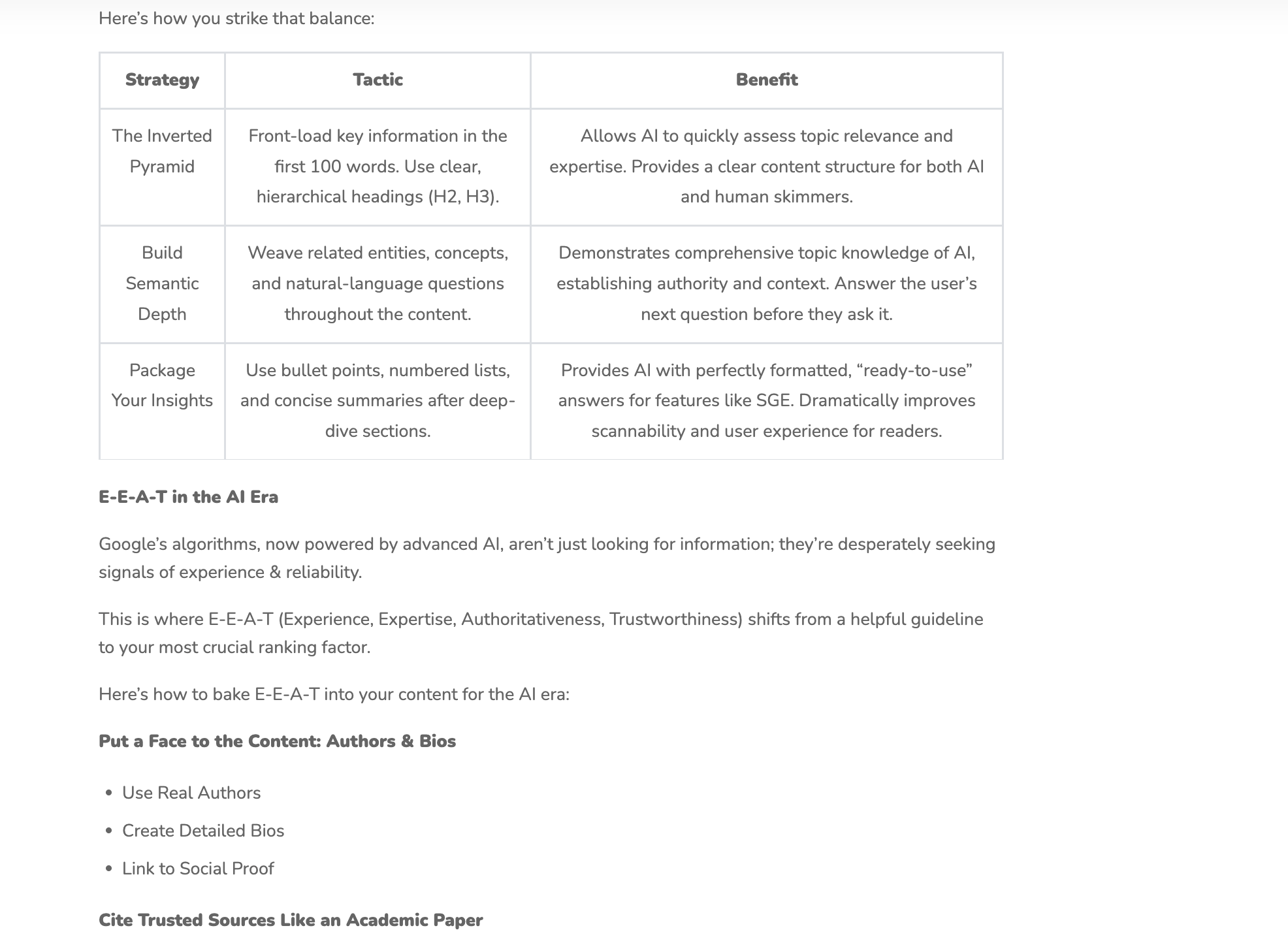 ort paragraphs and tables. This will make it easier for people to read as well as for AI models to reference your content.
- Write original product reviews:
LLMs focus more on authentic and detailed reviews, including benefits, limitation and personal takeaways from products or services. Try to create an original, experimental narrative that records your personal experience with the product.This helps to create credibility. Platforms like CNET and The Verge do this very well.
- Add comparison tables:
Create comparative product descriptions according to each feature. This makes your content worthy of being highlighted by LLMs, especially when people are looking for specific solutions like “which sunscreen is best for dry skin?”
- Include FAQs:
Format your FAQs by placing the questions as subheadings with direct, concise answers underneath. This structure makes it easy for LLMs to fetch relevant sections and reference your content.
- Offer unique insights:
Research competitor blogs well before writing, and ensure that your content has something unique to offer. This will let LLMs know that your perspective is fresh, increasing your chances of getting quoted and cited.
- Demonstrate your authority:
Use author introductions, citations from sources and write in an experienced tone. This helps LLM understand that you speak from a niche-based authority, making them trust your content.
- Add multimedia:
Descriptive captions with visuals and alt text help LLMs to better understand content, which further helps users to get a better idea through the AI answers.
- Build useful tools:
Free templates, checklists and calculators are very shareable and easy to extract for AI systems. You can add these and explain their value with titles and descriptions.
Ideal Platforms for LLM Seeding Placement
To ensure you get quoted in AI-generated answers, you cannot just stop at publishing content on your website. You need a good mix of many sources online from which these models extract information. Here are some places to start with –
- Third-party platforms: Medium, Substack and LinkedIn articles get referenced a lot in AI answers because of clear formats and the added weight of real author profiles. Hence, your content can benefit from the visibility of these platforms.
- Industry pages and guest posts: Trusted outlets like trade blogs, marketing publications and niche news sites can build brand credibility.
- Expert quotations: Referring to journalists and bloggers through services like HARO or Featured may help your articles get quoted directly.
- Product roundup and comparison sites: Industry-based product comparison sites comparing products like smartphones, skincare and other products can be helpful and provide quote-worthy explanations.
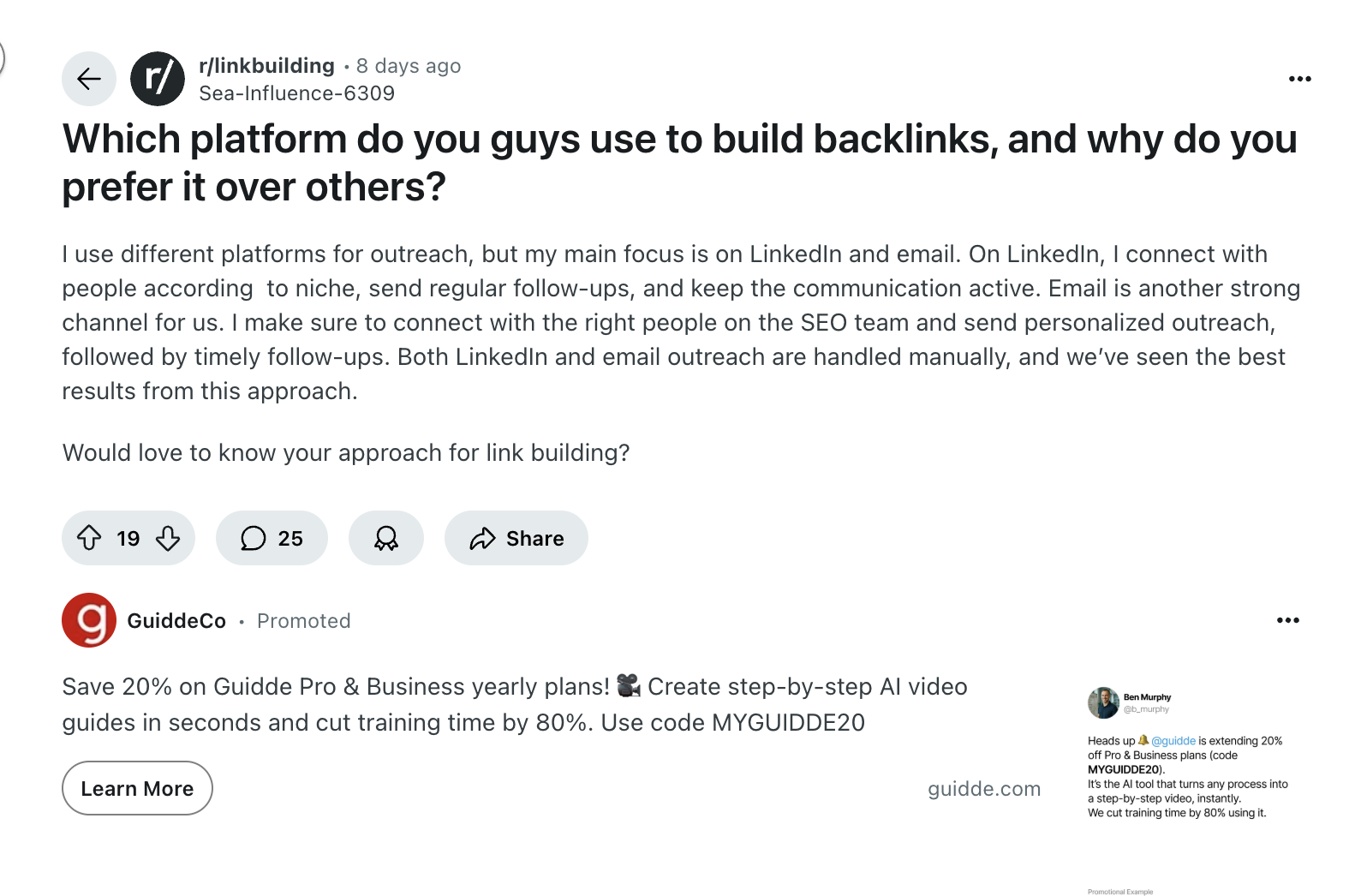
- Forums and communities: Reddit and Quora are two communities with user-generated answers from which AI models quote repeatedly, which you can publish into to get more visibility.
- Editorial microsites: Small, research-driven blogs or websites can have more authority than brand pages, which is why you can also publish there to find your way to the answers generated by AI tools.
- Social media: Platforms like YouTube, LinkedIn and even Reddit Threads can be great places to publish content as they contain searchable databases for LLMs.
How to Track LLM Seeding?
While you may not see direct metrics like the number of clicks and referral traffic, there are some ways to track LLM seeding –
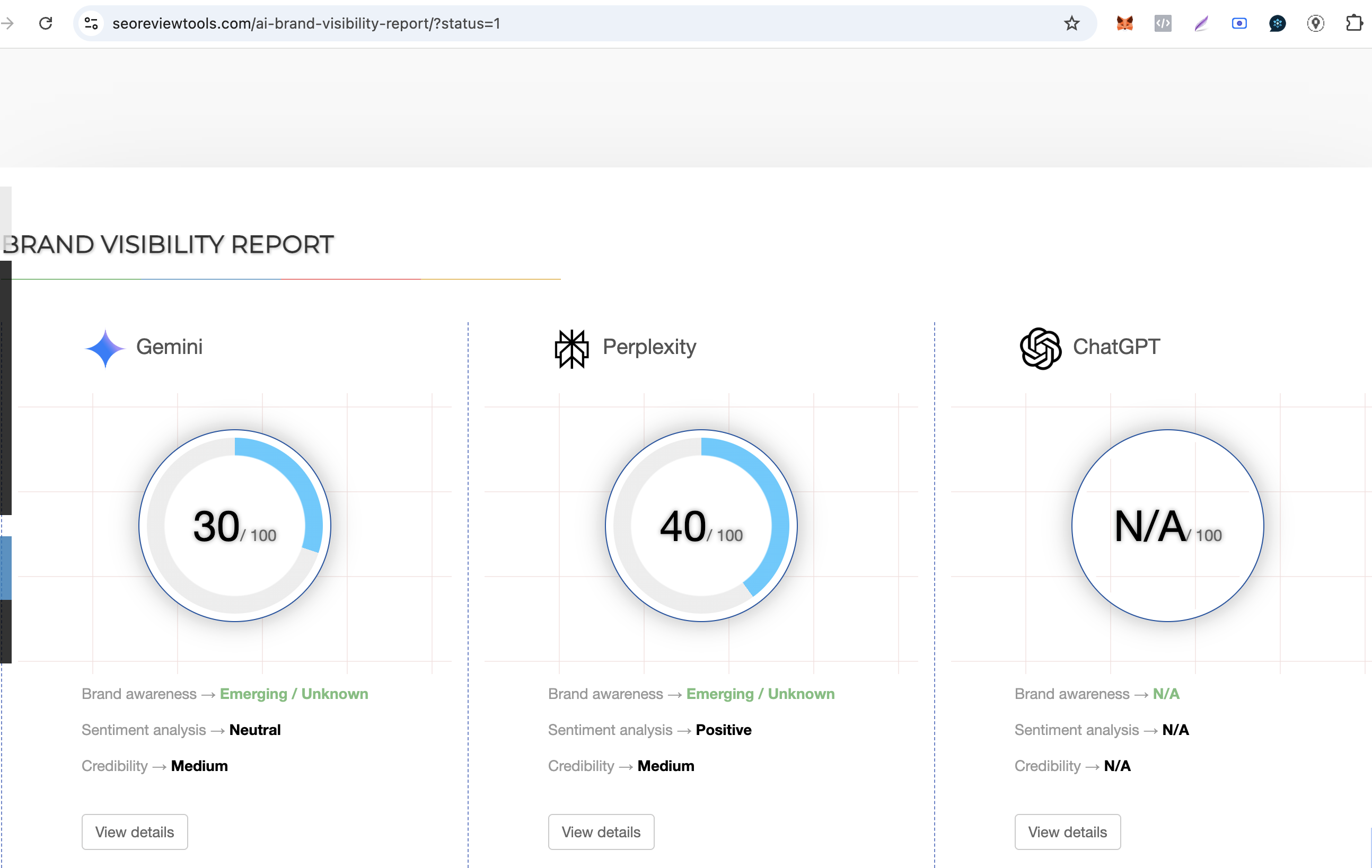
- Brand mentions in AI tools: You can run audience-style prompts in ChatGPT, Claude Gemini and Perplexity while in incognito mode. Or you can use ChatGPT’s advanced data analytics or Perplexity Pro to show cites domains. Tools like Semrush AIO and Profound can also do this.
- Referral traffic growth: Tools like GA4 help you determine the effectiveness of LLM seeding. Navigate through Reports > Acquisition >Traffic Acquisition and filter for your chosen kind of traffic.
- Unlinked mentions: You can set up Google Alerts for brand name or product mentions. For this, you can also use Semrush’s brand monitoring tool.
- Overall LLM visibility: Serpstat, Similarweb, Profound and other companies now provide AI visibility reporting, which you can check.
FAQs
What is LLM seeding?
+
LLM seeding is the process of publishing content in formats and locations online that large language models can easily crawl and cite, rather than only optimising for search rankings. This method entails optimising for visibility and citation in AI-generated answers.
What is an LLM mention?
+
An LLM mention is when an AI platform draws a direct reference to your content without a clickable link to your website.
How do I check the success of LLM seeding efforts?
+
You can run audience-style prompts in AI tools (like “best platform to publish guest posts”) and see if your website shows up in the AI-generated answers. You may also check referral traffic trends in GA4.
How long does it take to see results for LLM seeding?
+
While there may not be instant results, you can expect a time period of a few weeks to months for your content to be reflected in AI responses. This depends on how often the model updates its data or crawlers refresh content.
Is LLM seeding only useful for top-ranking pages?
+
Not at all! Smaller businesses, as well as niche websites, can often benefit from LLM seeding. LLMs do not always prioritise top-ranking sites; rather, they look for informative and authoritative content.
Conclusion
The search landscape has undergone a complete transformation. Audiences no longer solely depend on Google search results. People are turning to AI tools like Gemini or ChatGPT to find every answer they seek. Hence, these AI platforms are now holding the power to decide whether your brand gets noticed.
If you want your business to be visible, understanding LLM seeding is crucial. By optimising your content, you can maintain credibility and show up even when clicks are scarce. This allows you to future-proof your marketing against zero-click trends, keep your brand agile and at the top of mind.
To ace LLM seeding, you can start publishing structured, categorised and informative content that LLM models favour to easily surface and cite your website.
To get an even better chance at visibility, amplify your voice on external platforms and monitor how your brand resonates.
You may publish on popular third-party platforms like Quora and Reddit, and track whether your brand shows up in AI outputs with tools like Perplexity Pro and Advanced Data Analytics in ChatGPT.
Evolve today to dominate tomorrow!