-
By Gunjan Gupta
- In Uncategorized
Omnichannel Marketing: The Complete 2026 Guide (Definition, Strategy, and Examples)
Imagine this.
You order a coffee on an app while walking to work. You step inside. The barista smiles and says your name. Your drink is already waiting. Later that afternoon, an email hits your inbox. It’s a coupon for the exact muffin you buy every Tuesday.
That is omnichannel marketing.
It’s not just “being everywhere.” It’s making sure your website, app, social media, and physical store all talk to each other.
In the old days, marketing teams worked in silos. The email team didn’t know what the retail team was doing. It was messy. And it costs businesses money.
Your customers don’t see “channels.” They see one brand. If the experience is broken, they leave.
But if you get it right? The rewards are massive.
I have spent 15 years watching brands struggle with this. Here is the reality: Omnichannel campaigns have a 287% higher purchase rate than single-channel ones. That isn’t just a small win. That’s a game-changer for your revenue.
In this guide, I’m breaking down the exact strategy you need to connect the dots and drive real results.
At a Glance: What You’ll Learn
If you only have a minute, here is the “too long; didn’t read” version of this guide:
- The Big Difference: Multichannel is just “being everywhere,” but Omnichannel is making sure those places actually talk to each other to help the customer.
- The Revenue Boost: Businesses using omnichannel strategies see a 287% higher purchase rate than those sticking to just one channel.
- Customer-First: It shifts your focus from “how do we sell more?” to “how do we make the shopping journey feel like one continuous, easy conversation?”
- Trust Through Consistency: When your Instagram, website, and physical store all have the same “vibe” and info, customers trust you more.
- Future-Proofing: With AI changing how we search, owning your own data (like email lists) is the only way to stay ahead of the curve.
- No Huge Budget Needed: You don’t need to be Starbucks to win. You just need to connect the tools you already use, like your CRM and email, so they share the same “brain.”
What is Omnichannel Marketing?
Think of your favourite brand. To you, it’s one name, one logo, and one feeling. You don’t care if you’re talking to them on WhatsApp, browsing their website, or standing in their store.
That is the heart of omnichannel marketing.
It is a strategy that integrates all marketing channels into a seamless experience. Instead of your departments acting like strangers, they work together to follow the customer.
How it Works (Small vs. Enterprise)
To really understand it, you have to see it in action. It scales based on the size of the business:
- On a Small Scale: You look at a jacket on a website but don’t buy it. Later, you see an ad for that exact jacket on Instagram. You click, and it takes you straight to the checkout with your size already selected.
- At Enterprise Scale: This is where the magic happens. Every team, from customer service to the warehouse, shares one single “customer profile.”
o Shared Context: If you call support, the rep knows exactly what you bought in-store yesterday.
o Unified Inventory: You can buy a gift online and pick it up at a local shop five minutes later.
o Universal Loyalty: Your rewards points update instantly, whether you spend them on the app or at a physical cash register.
The Three Goals of Omnichannel
I have seen many brands try to “do” omnichannel, but they miss the point. A true strategy serves three main purposes:
- Consistency: Your message stays the same while the customer moves from “just looking” to “ready to buy.”
- Seamlessness: It removes the friction. It makes buying so easy that the customer doesn’t have to think twice.
- Loyalty: It doesn’t stop at the sale. It uses data to keep the conversation going, making sure the customer feels seen and valued long after they’ve paid.
Why It’s Better Than the “Old Way”
In the past, marketing was “multi-channel.” You had a website and a store, but they didn’t talk. It was like a relay race where no one passed the baton.
Omnichannel closes those gaps. When your data and your creative work come together, your customers move forward, and your revenue moves with them. It’s about making the buying journey feel like one continuous conversation, no matter where it happens.
Omnichannel vs. Multichannel: What’s the Difference?
You’ve probably heard both terms used in marketing meetings. They sound similar, but there is one massive difference: Connection.
Think of it like this.
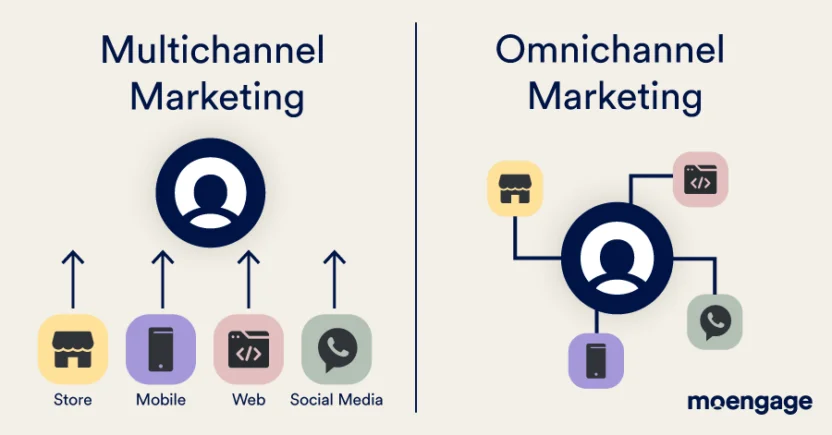
Multichannel marketing is like having a bunch of different megaphones. You have a Facebook page, an email list, and a store. You’re sending out messages on all of them, but the megaphones aren’t plugged into each other. Each channel is a “silo.”
Omnichannel marketing is like a symphony. Each instrument plays a different part, but they all follow the same sheet music. The channels talk to each other. They share data. They remember the customer.
Why the Shift Matters?
Most businesses start with a multichannel approach. It’s easier. You set up a website, you run some ads, and you send a newsletter. It works well for simple, one-off promos or quick tests.
But modern customers aren’t linear. They don’t just see an ad and buy. They browse on their phone while waiting for a bus, check reviews on their laptop at home, and might finally buy the product in-store three days later.
If you stay in the “multichannel” lane, you lose that customer’s history at every step.
Here is how I like to break it down after 15 years in the game:
- Multichannel is Brand-Centric: It’s about the brand pushing a message out through different doors. It’s operational and static. One channel doesn’t know what the other is doing.
- Omnichannel is Customer-Centric: It puts the customer in the middle. The strategy is fluid and “gets smarter” as the customer interacts with it.
For example, in an omnichannel world, if you put a shirt in your online cart but don’t buy it, your Facebook ads will change to show you that shirt. Then, you might get an email with a 10% discount to finish the job. That’s a live update. That’s seamless.
Multichannel is about reach. Omnichannel is about experience.
If you want to stop money from slipping through the cracks, you have to move past just “having channels” and start connecting them.
At a Glance: Omnichannel vs. Multichannel
| Feature | Multichannel Marketing | Omnichannel Marketing |
| Focus | Putting the brand at the centre | Putting the customer at the centre |
| Goal | Maximising reach across many doors | Creating a seamless, connected journey |
| Data | Siloed (teams don’t share info) | Integrated (all teams see one profile) |
| Experience | Static and disconnected | Fluid and personalised |
| Complexity | Simple and linear | Nonlinear and advanced |
| Best For | Quick promos and basic tools | Long-term loyalty and high revenue |
Why Is Omnichannel Marketing Important?
Your customers don’t live on one app. They don’t just “search and buy.”
They search on Google. They watch a review on YouTube. They scroll past a Reel. They ask Gemini for a product comparison. Then they price-check on Amazon and finally walk into a physical store to touch the product.
If you only focus on one area, like SEO or just Instagram, you are missing all the other moments that actually push people to pull out their credit cards.
Here is why making the switch to omnichannel isn’t just a “nice to have”, it’s a survival tactic.
1. It Builds Massive Trust
People trust what is consistent. If your Facebook ad says one thing, but your website says another, the customer gets confused. And confused customers do not buy.
When your brand looks, feels, and talks the same way on every platform, you cut the friction. The customer feels like you actually know them. That consistency is what turns a “maybe” into a sale.
2. You “De-Risk” Your Business
I’ve seen it happen a hundred times. A brand relies 100% on one channel. Let’s say Facebook Ads and then the algorithm changes, or costs skyrocket. Suddenly, their leads dry up.
An omnichannel strategy spreads your risk. If one channel slows down, you still have your email list, your SMS marketing, and your retail presence all working together. You aren’t putting all your eggs in one basket.
3. You Stop Guessing (Better Data)
When your data is shared, you finally see the “big picture.” You’ll know exactly which mix of channels drove that first purchase and what made them come back for a second.
This leads to:
- Better ROI: You stop wasting money on ads that don’t work.
- Higher Order Value: You can suggest the right products at the right time.
- Smart Spending: You reach the right person exactly when they are ready to buy.
4. It Matches How People Actually Shop
Technology is moving fast. Consumer habits are shifting. If you aren’t present at every step of the journey, you’re essentially invisible.
The brands that win today are the ones that coordinate their message across every screen. They make the buying journey feel like one smooth, continuous conversation. If you’re serious about growth, you can’t afford to have gaps in that conversation.
The Real-World Benefits of Going Omnichannel
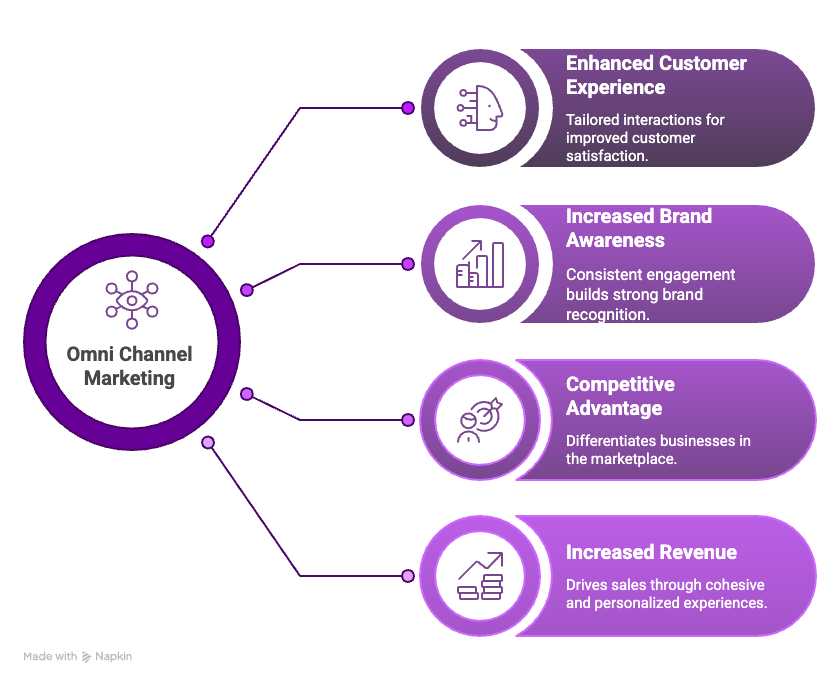
If importance is the “why,” the benefits are the “what’s in it for you.”
1. A Customer Experience That “Remembers”
In a world of short attention spans, progress is everything. With an omnichannel setup, your customers’ context follows them like a helpful assistant.
- No Dead Ends: If they add a shirt to their cart on the app, it’s waiting for them when they log in on their laptop.
- Smart Support: If they ask a question on website chat, your follow-up email already has the answer.
- The “Abandon Cart” Win: When someone leaves without buying, an automated trigger sends a nudge with the exact item they liked. It feels like a reminder, not a cold pitch.
2. Personalisation That Feels Like Help (Not Hype)
I’ve been doing this for years, and I can tell you: people don’t hate ads; they hate irrelevant ads.
When your channels share data, you can stop shouting at everyone and start talking to someone. You can recommend items based on past behaviour or, better yet, pause a promotion the second they purchase, so you are not wasting money on “converted” users.
3. Bulletproof Brand Awareness
Consistency is the secret sauce of a strong brand. When your messaging, look, and offers are identical on Instagram, Google, and in-store, recall goes up. People start to recognise your “vibe” instantly.
Plus, when the experience is this smooth, people talk. Word-of-mouth referrals happen naturally because you’ve made it so easy for them to shop.
4. An Unfair Competitive Advantage
We still see businesses working in silos. Their social media team doesn’t talk to their warehouse team.
By syncing your data, inventory, and messaging, you move faster. You can reuse creative assets, keep offers consistent, and measure what’s actually working. That speed is a massive edge that is very hard for “siloed” brands to copy.
5. The Revenue Flywheel
At the end of the day, less friction equals more sales.
- Higher Conversions: More people finish the checkout process when it’s easy.
- Better Loyalty: Why would a customer shop somewhere else when you’ve made their life so simple?
- Sharper Attribution: You finally know exactly which mix of channels is driving the most profit, so you can double down on what works. Over time, better data leads to better targeting, which leads to happier customers and higher revenue. It’s a win-win.
How to Build a Winning Omnichannel Strategy
Building an omnichannel strategy isn’t about wishing your customers behaved differently. It’s about meeting them exactly where they are.
If you want to stop losing leads and start driving real revenue, follow these five proven steps.
1. Centralise Your Truth (Data)
You can’t fix what you can’t see. Start by pulling your website analytics, email metrics, social media performance, and support logs into one view.
Look for these insights:
- Which devices are they actually using to buy?
- What messaging makes them click?
- Where is the friction in your current checkout process?
Pro Tip: Choose an attribution model that fits. If you have a longer sales cycle (like B2B or high-ticket consulting), use position-based tracking. If you’re running a fast-moving e-commerce store, data-driven attribution is your best friend.
2. Map the (Non-Linear) Journey
Your customers don’t move in a straight line. They might see a LinkedIn post, watch a YouTube review, ask an LLM for a comparison, and then visit your site.
To map this out:
- Identify the Persona: Use your CRM to see who is actually buying.
- Find the “Hangouts”: Are they on Reddit? Instagram? SMS?
- Pinpoint Pain Points: What is stopping them from clicking “buy”? Is it a confusing checkout? Lack of trust?
- Track the Path: Identify the 3-4 most common ways people go from “stranger” to “customer.”
3. Integrate Your Tech Stack
Once you know the journey, you need the tools to connect the dots. You don’t need a massive dev team; you just need the right “connectors.”
- CRM (The Heart): Use a tool like HubSpot or Omnisend to store a single profile for every customer.
- Marketing Automation: Use Zapier to link your apps. If a lead fills out a form on Facebook, your email tool should know instantly.
- Social Management: Use smart platforms to put all your messages in one “Social Inbox.” Your team shouldn’t have to jump between five apps to answer a customer.
- CDP (The Brain): For larger scales, a Customer Data Platform cleans and connects data from your site, app, and POS in real-time.
4. Create “Omnichannel” Brand Guidelines
Consistency is the glue. If your social media is “witty and human” but your customer support sounds like a legal robot, the experience breaks.
Your guidelines must cover:
- Visuals: Logo placement and imagery across all screens.
- Voice & Tone: Specific “Do’s and Don’ts” (e.g., “Be helpful, not hypey”).
- Channel Specifics: How a message changes from a short SMS to a deep-dive blog post while keeping the same “vibe.”
5. Test, Measure, and Optimise
Before you go live, “secret shop” your own brand. Buy a product on your phone. Reach out to the chatbot. See if the experience feels like one continuous conversation or a series of broken links.
The Metrics That Matter:
- Discovery: Impressions and blog traffic.
- Consideration: Social engagement and product views.
- Conversion: Checkout rate and Cost Per Acquisition (CPA).
- Loyalty: Repeat purchase rate and customer reviews.
Review your data weekly. Modern marketing moves fast. Your strategy should, too. Optimise your creative and budget based on what the data tells you, not what you “feel” is working.
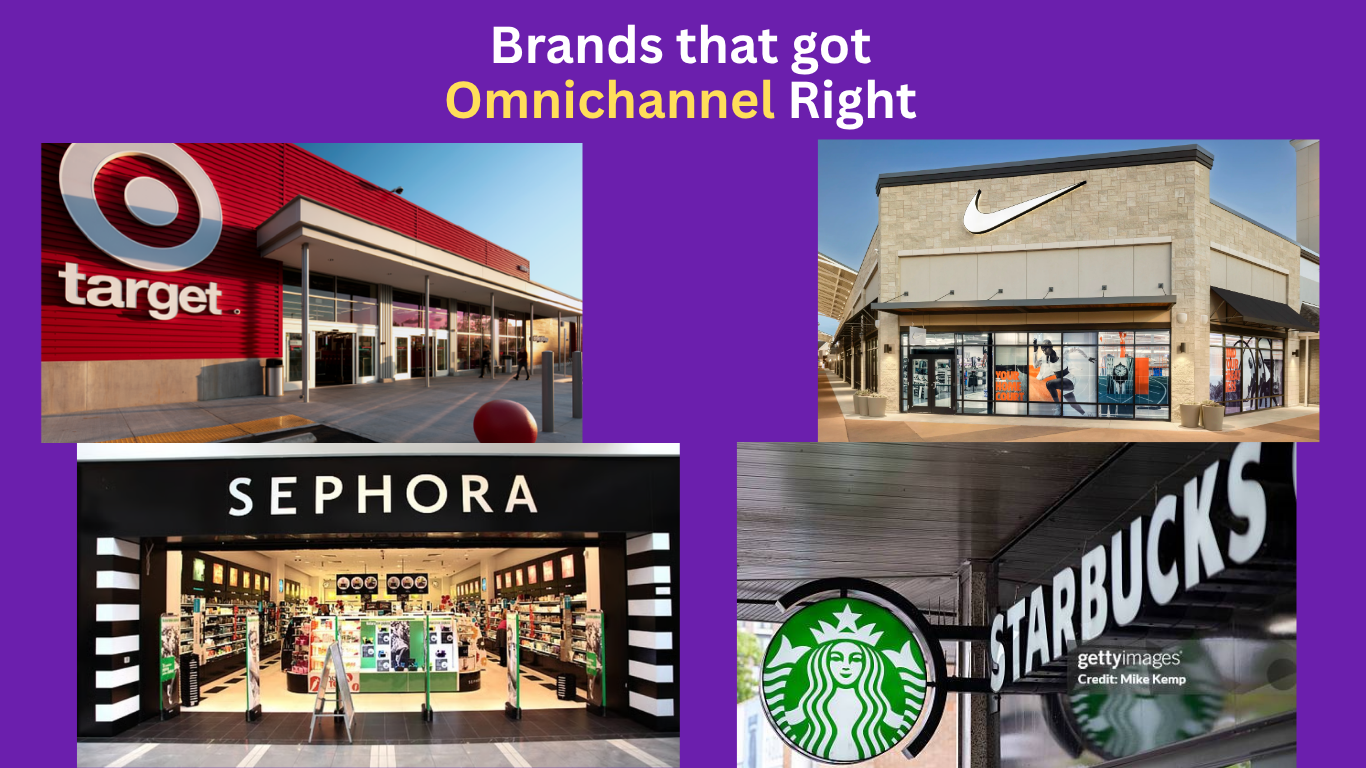
Omnichannel in the Wild: Brands That Get It Right
Reading about strategy is one thing. Seeing it in action is where the fun starts.
Think of these brands as the “straight-A students” of marketing. They’ve figured out how to make you feel like a VIP, whether you’re in your pyjamas on the couch or standing in line at their store.
1. Sephora: Your Personal Beauty Assistant
Sephora doesn’t just sell lipstick; they sell a memory. When you sign up, your phone number becomes your golden ticket.
- The “Wait, What Did I Buy?” Fix: Ever forgotten the exact shade of foundation you bought six months ago? Sephora’s app remembers so you don’t have to.
- Birthday Magic: Whether you shop online or walk into a store, they know it’s your birthday month. You get a gift just for being born.
- The Result: It feels less like a big corporation and more like a friend who knows exactly what’s in your makeup bag.
2. Nike: The Ultimate Gym Buddy
Nike doesn’t just sell sneakers; they sell a lifestyle that follows you from your morning run to the checkout counter. They’ve mastered the art of making “digital” and “physical” feel like the same thing.
- The “Reserved for You” Perk: Imagine browsing a pair of Jordans on the Nike app. You haven’t bought them yet.
A few days later, you walk past a Nike store. Your phone pings: “Hey, those shoes are in stock here. We’ve reserved your size in Locker 4. Just scan this code to try them on.”
The Scan-to-Learn Magic: When you’re in the store, you can use the app to scan any shoe on the shelf. Instantly, you see available sizes, colours, and what other runners are saying in the reviews. No more hunting for a sales associate.
- Member Rewards: Whether you’re smashing a workout on the Nike Training Club app or buying a hoodie online, your “Member” status stays in sync. You get early access to drops because Nike knows exactly what sports you’re into.
- The Lesson: Nike makes shopping feel like a high-tech game where the customer always wins.
3. Starbucks: More Than Just a Caffeine Fix
The Starbucks app is basically a magic wand for coffee lovers.
- Beat the Line: You order on the app while walking. You step inside, and your latte is sitting there, already paid for.
- Weather-Ready: If it’s 40°C in Noida, the app suggests a cold brew. If it’s raining, it nudges you toward a warm chai.
- Rewards Everywhere: You earn points on your phone, but you spend them at the counter. It’s one seamless loop of caffeine and happiness.
4. Target: The King of Convenience
Target has mastered the art of the “quick trip” that turns into a two-hour adventure.
- The Stock Spy: Nothing is worse than driving to a store for a specific toy only to find it’s sold out. Target’s app tells you exactly what is on the shelf at your local store in real-time.
- Target Circle: Their rewards program works everywhere. Buy a blender online? Points. Buy socks in-person? Points.
- The “Drive Up” Win: You buy online, park in a specific spot, and a human brings your bags to your car. That is omnichannel perfection.
How to Make This Happen for Your Brand
You might be thinking, “Gunjan, I’m not Starbucks. I don’t have a billion-dollar app budget.”
And you know what: You don’t need one.
At Pixel Spark, we help brands connect these dots without the “enterprise” headache. Whether it’s setting up smart email workflows that trigger after a site visit, or making sure your social media ads actually talk to your CRM, we build the “glue” that holds your marketing together.
Our goal? To make your brand feel as smooth as a Sephora birthday gift.
The Future of Omnichannel: Trends & What’s Next?
If you think marketing moves fast now, buckle up. The “old way” of doing things, waiting for a customer to click a link and buy, is changing.
In fact, nearly 60% of searches now end without a single click. Why? Because AI and search engines are answering questions directly on the results page.
So, how do you win when the rules are changing?
Image- https://www.bolddesk.com/blogs/customer-journey-map
You look ahead. Here is where the industry is going:
1. First-Party Data is Your New Superpower
Third-party cookies (the trackers that follow you around the web) are fading away. To survive, you need to own your data. Your email lists, purchase histories, and loyalty programs are now your most valuable assets.
The brands that “own” their audience, instead of just “renting” them from big ad platforms, will be the ones left standing.
2. AI Chatbots That Actually Feel… Human
We’ve all dealt with frustrating bots that don’t understand a simple question. Those days are ending.
The future belongs to AI-enabled chatbots that can handle complex tasks and simulate real conversations. They don’t just “link” you to a page; they solve your problem, track your order, and recommend your next favourite product in one chat.
3. The “Everywhere” Journey
The customer journey is expanding into places we never expected.
- Voice & Vision: People are shopping through voice assistants and even in-car systems.
- Cross-Device Chaos: It’s common now for someone to browse on a tablet while watching a “connected TV” ad and price-checking on their phone.
- Smart Supply Chains: Technology now allows online stores and physical shops to stay perfectly in sync. If you buy the last item online, the shelf tag in the physical store can update instantly.
4. Real-Time Personalisation
The future isn’t just about “sending an email.” It’s about real-time automation. Imagine a system that adjusts your website’s homepage or your social media offers the second a customer’s behaviour changes. No manual work. Just smart systems using your data to stay one step ahead of the buyer.
Is Your “Data House” in Order?
At Pixel Spark, we’re obsessed with what’s coming next. We don’t just build for today; we help you set up the systems, such as LLM-friendly content and smart data flows, that will keep you relevant in an AI-driven world.
The future is smarter, faster, and way more connected. If you start getting your data house in order now, you won’t just adapt, you’ll lead.
Frequently Asked Questions (FAQ)
What is the difference between omnichannel and multichannel marketing?
+
Multichannel marketing means you are using many platforms (like email, social media, and a store) to reach people, but those platforms don’t “talk” to each other. Omnichannel marketing connects all those platforms so the customer has one seamless experience. In omnichannel, your website knows what your app is doing, and your store knows what your email said.
Why is omnichannel marketing important for small businesses?
+
You don’t need a billion-dollar budget to go omnichannel. It’s important because it stops you from losing money. When your data is connected, you don’t send irrelevant ads to people who already bought from you. It builds trust, improves customer loyalty, and most importantly, leads to a 287% higher purchase rate than using just one channel.
What are some common omnichannel marketing tools?
+
To get started, you need a CRM to keep all your customer info in one place. You also need Marketing Automation to connect your apps and Social Media Management tools so your team can see every message in one single inbox.
How do I start an omnichannel strategy?
+
Start by mapping your customer journey. Figure out where your buyers “hang out” and where they get stuck. Then, connect the tools you already use so they share data. The goal is to make sure your brand looks and feels the same whether a customer is on their phone or standing in your shop.
Let’s Connect the Dots with Pixel Spark
The world is noisy. Your customers are busy. They are jumping from Google to Instagram to ChatGPT to their local coffee shop in a matter of minutes. If your brand feels like a different person on every platform, they’re going to get confused. And as we say in the industry: A confused mind always says “no.”
Omnichannel marketing is not about being perfect on every single app on the planet. It’s about being consistent where your customers already are. It’s about making their lives easier.
When you stop treating your website, your ads, and your emails like separate islands, magic happens. You stop chasing sales and start building a brand that people actually recognise and trust.
Need a hand building your bridge?
At Pixel Spark, we live for this stuff. We know that as a business owner, you don’t have time to play “IT Support” with five different marketing tools. You want a strategy that just works, one that’s human, witty, and drives real results.
Whether you’re looking to “humanise” your content or get your data house for the AI era, we’re here to help you spark something big.
Ready to turn those silos into a symphony? Let’s chat and get your omnichannel journey started.