• California, TX 70240
  • info@gmail.com
  • +123 456 7890
  • Office Hours: 8:00 AM – 7:45 PM

AEO/GEO Services

India’s Leading AEO Agency – Get Cited by ChatGPT, Perplexity & Google AI Overviews

The Way People Search Has Changed. Has Your Brand Kept Up?

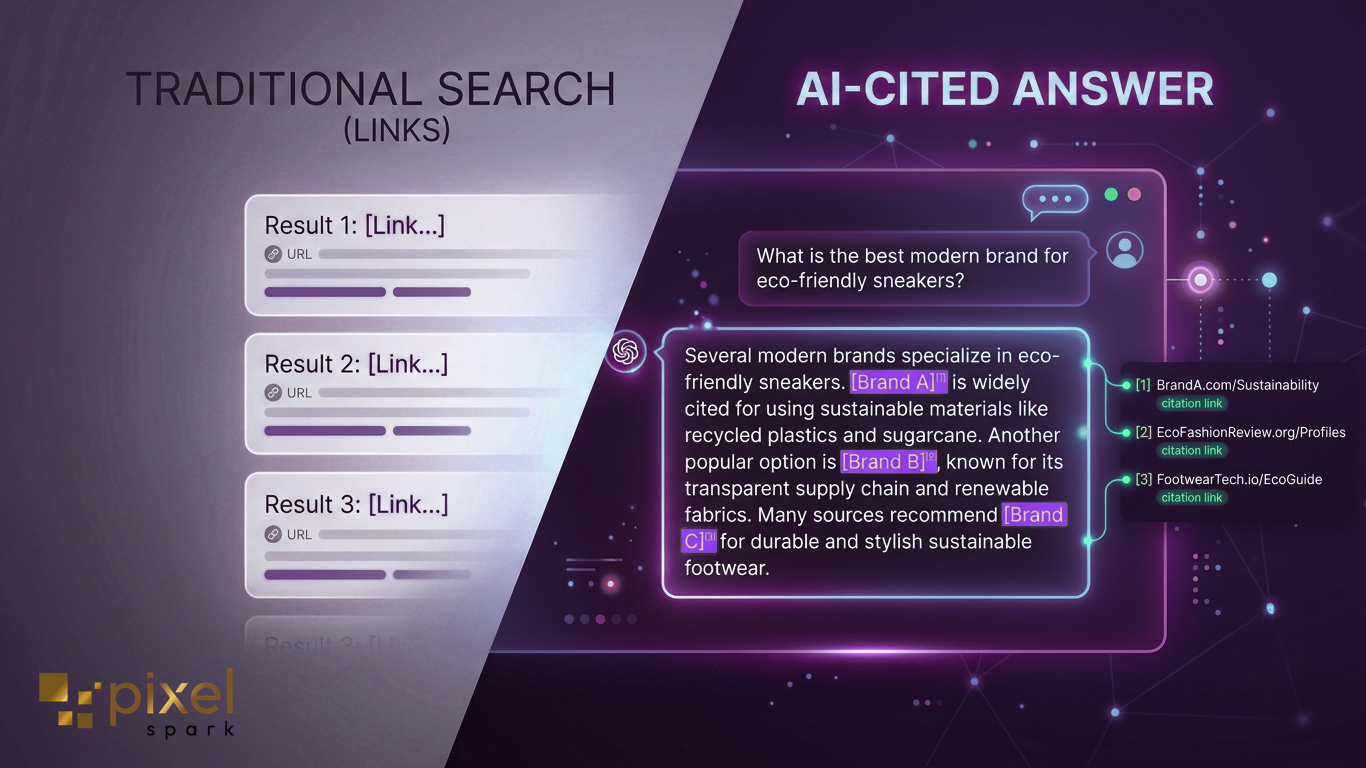
When someone asks ChatGPT to recommend the best CA firm in Delhi, or asks Perplexity which SaaS tool to use for HR management, your brand either appears in that answer, or a competitor does. There is no page two.

Search is no longer just about ranking on Google. AI-powered answer engines: ChatGPT, Google AI Overviews, Perplexity, Gemini, Claude, now generate direct answers from web content. The brands they cite get the click, the trust, and the conversion. The brands they ignore become invisible.

Pixel Spark is India’s specialist Answer Engine Optimization (AEO) and Generative Engine Optimization (GEO) agency. We make sure your business is the source AI tools trust, quote, and recommend.

Our AI Search Optimization Services

We offer a full suite of AEO services for businesses globally from auditing your current AI search visibility to building a long-term strategy for appearing in generative AI results.
1. Answer Engine Optimization (AEO)

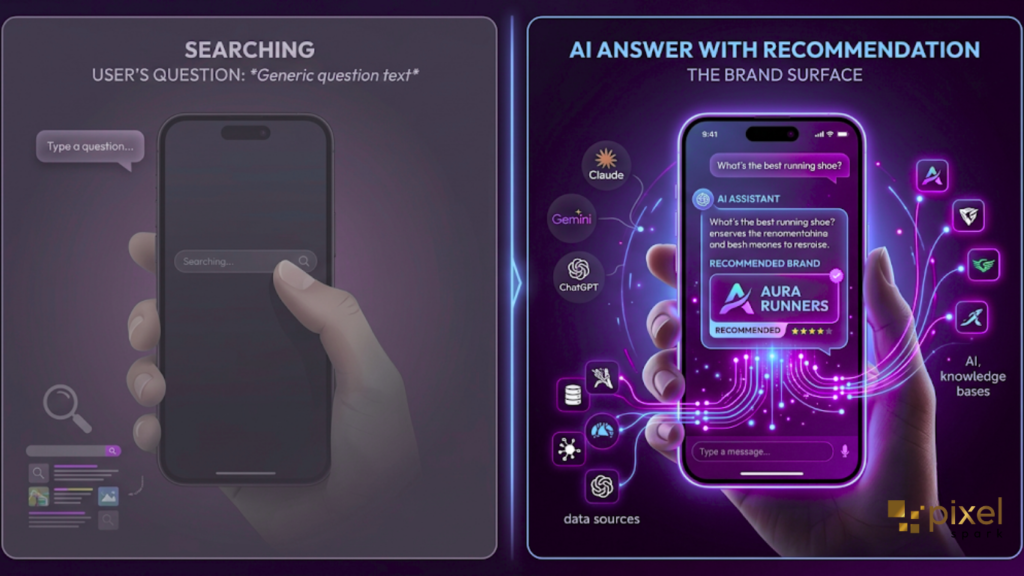
AEO is the practice of structuring your website content so that AI answer engines select your brand as the authoritative source when responding to user queries. We optimize your pages, FAQs, schema markup, and content architecture to maximize citation potential across ChatGPT, Perplexity, and Google AI Overviews.

2. Generative Engine Optimization (GEO)

While AEO focuses on the answer layer, GEO is a broader discipline specifically targeting generative AI systems like ChatGPT and Gemini. GEO encompasses AEO plus additional techniques, including entity optimization, semantic authority building, and AI model-specific content formatting. We keep these disciplines distinct because AI tools treat them differently and so should your strategy.

3. Google AI Overview Optimization

Google’s AI Overviews now appear above organic results for millions of queries. We reverse-engineer how Google AI Overviews select sources, then position your content to consistently appear in these high-visibility placements, even if you are not currently ranking in the top three organic positions.

4. LLM SEO & AI Citation Optimization

We optimize your brand’s presence in the training signals and real-time retrieval systems used by large language models. This includes structured data, authoritative third-party mentions, and E-E-A-T signals that make AI tools more likely to cite you when your topic area comes up.

5. Schema Markup & Technical AEO

We implement Service schema, FAQ Page schema, Organization schema, and other structured data types that give AI tools clean, machine-readable signals about who you are and what you do. Schema is wired to visible content, no hidden text shortcuts that create compliance risks.

6. AI Visibility Audit

Not sure where you stand? Our AI Visibility Audit maps your current citation rate across ChatGPT, Perplexity, and Google AI Overviews, benchmarks you against competitors, and produces a prioritized action plan specific to your industry and target queries.

7. AEO Content Strategy

We create and optimize content that AI tools actually cite, definition-first answers, clear mechanism explanations, and self-contained FAQ blocks that can be lifted independently by answer engines. Every piece is mapped to real question phrasing, not just keyword fragments.
Why AEO Matters Right Now For All Industries

It means appearing on top of the results in Search ranking is very crucial if you want to grow your business and want more leads. Over a period of time, once we are consistently on top results, it generates trust among our customers and also deepens your business’s relationship with them because of the trust you established with them.

AI search adoption is accelerating rapidly. Urban professionals and business decision-makers are increasingly using ChatGPT and Gemini as their first research tool rather than Google, particularly for B2B queries, financial services, legal questions, and technology purchases.

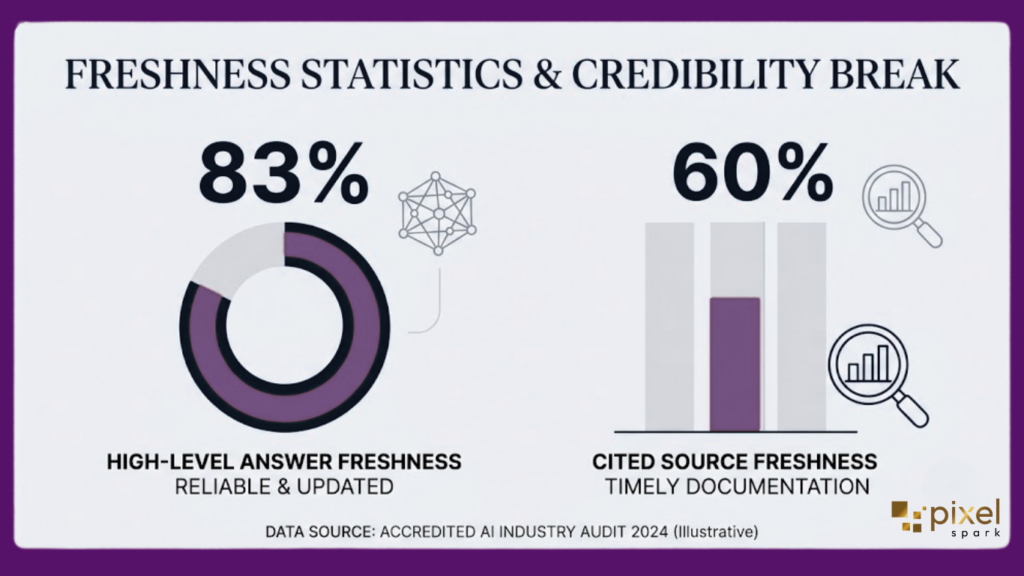
83% of AI citations for commercial and evaluation-stage queries come from pages updated within the past 12 months. More than 60% come from pages refreshed within the last six months.

This means AI search visibility is not a one-time setup; it is an ongoing discipline. And it means there is a significant first-mover advantage for Indian businesses that act now, before their category becomes saturated with AEO-optimized competitors.

Contrary to popular belief, ranking in the top positions on traditional Google search is not a prerequisite for appearing in AI Overviews or answer engines. AI engines surface answers based on content authority, relevance, and consensus signals, not rank position alone. A well-structured page from a mid-sized Indian business can outperform a top-ranked global competitor in AI citations.

Who We Serve

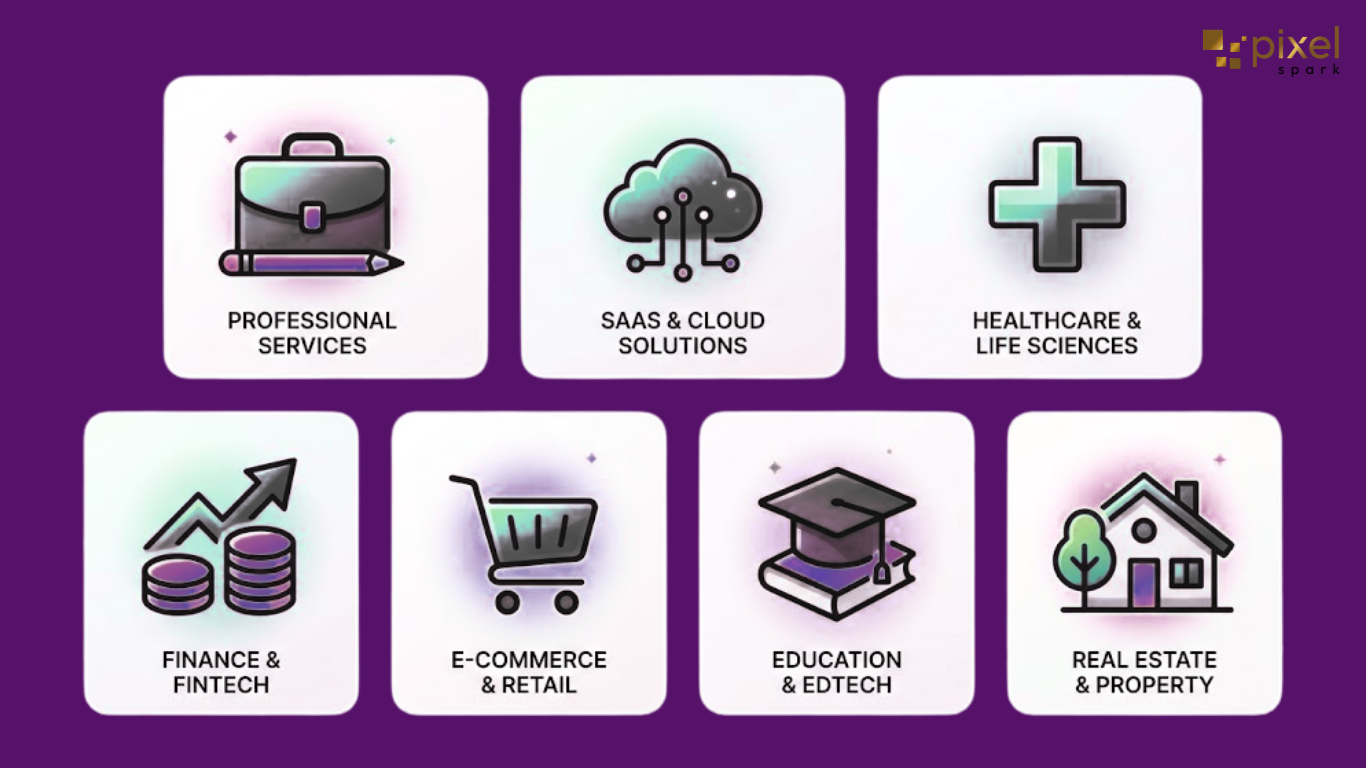
Pixel Spark works with businesses across all sectors where AI search citation directly impacts brand trust and lead generation.

  1.   Professional services firms: CA firms, law firms, consultancies, HR advisory
  2.   B2B SaaS and technology companies targeting global enterprises
  3.   Healthcare providers and wellness brands
  4.   Financial services: wealth management, insurance, fintech
  5.   E-commerce and D2C brands competing on product discovery queries
  6.   Educational institutions and EdTech platforms
  7.   Local and regional businesses in Delhi NCR, Gurgaon, Mumbai, and Bangalore

Whether you are an established enterprise or a growth-stage startup, if your customers use AI tools to research purchases or find providers, AEO belongs in your digital strategy. 

We Serve Businesses Across India and Globally

AEO Agency Delhi NCR | AEO Agency Gurgaon | AI Search Optimization Mumbai | AI Search Optimization Bangalore | GEO Consultancy India | AEO Services Pan-India


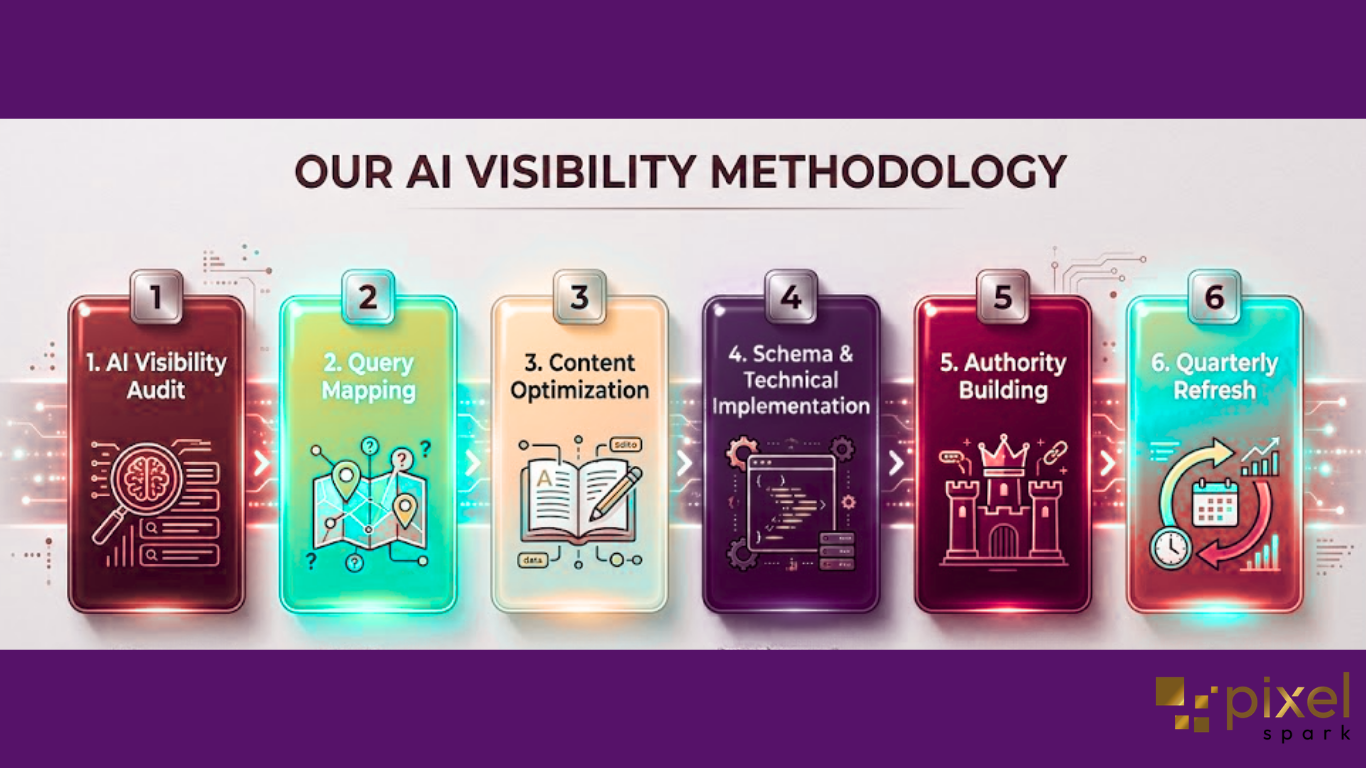
Our Process

• Boosts Your Credibility

1.   AI Visibility Audit

We establish your baseline citation rate and identify gap opportunities across ChatGPT, Perplexity, and AI Overviews.

2.       Query Mapping

We research the exact questions your customers are asking AI tools, using real phrasing (not keyword fragments) to structure your content strategy.

3.        Content Optimization

We rewrite or create content designed to be cited: definition-first, mechanism-clear, self-contained answers in 2-4 sentence blocks.

4.       Schema & Technical Implementation

We wire up the FAQ Page, Service, and Organization schema to your visible content and resolve technical barriers to AI crawling.

5.        Authority Building

We place your brand in third-party sources, industry directories, and authoritative publications that AI models draw from.

6.       Quarterly Refresh

We revisit your page stats and examples every quarter, because AI citation rates shift with content freshness. A publish-and-forget approach loses citation equity fast.


Frequently Asked Questions

(Use FAQ schema on this section — FAQPage schema should only be applied to visible question-and-answer content, not hidden text.)


Understanding AEO & GEO

Q: What is AEO (Answer Engine Optimization)?

A: Answer Engine Optimization (AEO) is the practice of structuring website content so that AI-powered answer engines, such as ChatGPT, Perplexity, Google AI Overviews, and Gemini, select your brand as the source when generating responses to user queries. Unlike traditional SEO, which targets keyword rankings on a search results page, AEO targets the answer layer: ensuring your brand is cited, quoted, or recommended when someone asks an AI tool a question in your category.

Q: What is the difference between SEO and AEO?

A: SEO (Search Engine Optimization) improves your visibility in traditional search results, the blue links on Google or Bing. AEO optimizes for a different outcome: being selected as the source that AI tools cite in their generated answers. You can rank well on Google and still be invisible in AI Overviews, and vice versa. Businesses that want comprehensive digital visibility now need both.

Q: What is GEO, and how is it different from AEO?

A: GEO (Generative Engine Optimization) is a broader discipline that specifically targets generative AI systems like ChatGPT and Gemini. AEO focuses on the answer layer, ensuring your content is selected as the cited source. GEO encompasses AEO plus additional techniques, including model-specific content formatting, entity optimization, and AI training signal strategies. We keep these disciplines distinct in our work because AI tools treat them differently, and search behavior data shows people increasingly search for both terms separately.

Q: Is AEO the same as voice search optimization?

A: They overlap but are not the same. Voice search optimization (popularized around 2017-2020) focused on optimizing for spoken queries through devices like Alexa and Google Home. AEO is broader and more current; it targets all answer-generating AI systems, including text-based interfaces like ChatGPT and Perplexity, as well as Google’s AI Overviews in traditional search. The content principles are similar (conversational phrasing, direct answers, structured data), but the technical implementation and target platforms differ significantly.

How AI Search Works

Q: How do AI search engines like ChatGPT and Perplexity choose which sources to cite?

A: AI answer engines select sources based on a combination of factors: content authority (how widely your domain is cited by other reputable sources), content relevance (how precisely your content answers the specific query), content structure (whether your content presents answers in a clear, self-contained format that can be extracted), and freshness (how recently the content was published or updated). There is no single ranking factor, AI engines look for consensus signals across multiple sources and select pages that clearly own the answer to a query.

Q: How does Google AI Overview decide what to show?

A: Google AI Overviews are generated by drawing from multiple web sources to construct a synthesized answer. Google’s systems assess E-E-A-T signals (Experience, Expertise, Authoritativeness, Trustworthiness), structured data, content freshness, and how well a page directly addresses the query intent. Importantly, Google AI Overviews do not simply reproduce the top-ranked organic result; they often draw from multiple sources, meaning a page that ranks 8th or 10th organically can still appear in an AI Overview if its content structure is superior.

Q: Does my website need to rank #1 on Google to appear in AI Overviews?

A: No. This is one of the most important distinctions in modern search. Ranking in the top organic positions is not a prerequisite for appearing in AI Overviews or other answer engines. AI engines surface answers based on content authority, relevance, and clarity of answer, not rank position alone. This is a genuine opportunity for well-structured content from mid-sized Indian businesses to outperform larger competitors in AI citations, even if traditional SEO has historically been difficult to win.

Practical Questions

Q: How do I optimize my website content for ChatGPT and AI search?

A: Start with structure: write answers in a definition-first format (state what something is before explaining how it works), keep key answers to 2-4 sentences so they can be extracted cleanly, and build genuine FAQ sections that mirror how your customers actually phrase questions. Beyond content, implement relevant schema markup, ensure your domain has credible third-party citations, and update high-priority pages at least every six months. AEO is not a single fix,  it is an ongoing content and authority discipline.

Q: What schema markup helps with AI search visibility?

A: The most impactful schema types for AEO are FAQPage schema (applied to visible FAQ sections only), Service schema (for service pages describing what you offer), Organization schema (for brand identity signals), and Article or NewsArticle schema (for content pages). Schema should always map to content that is visibly present on the page; implementing schema on hidden text is a compliance risk and does not improve AI citation rates.

Q: How long does it take to get cited by AI search engines?

A: Initial improvements in AI citation rates typically appear within 6-12 weeks of implementing AEO changes, though this varies by domain authority, content quality, and how competitive the target queries are. Significant, consistent citation presence in ChatGPT, Perplexity, and Google AI Overviews generally takes 3-6 months of sustained work. Unlike traditional SEO, there is no single moment of ‘ranking’. AI citation is probabilistic and improves progressively as content authority accumulates.

Q: How much does AEO / AI search optimization cost in India?

A: AEO service pricing in India varies based on scope, industry competitiveness, and whether you need a one-time audit or an ongoing optimization program. Pixel Spark offers project-based engagements starting with an AI Visibility Audit, as well as monthly retainer packages for businesses that want continuous optimization and quarterly content refreshes. Contact us for a scoped proposal based on your specific goals and current AI search visibility.

Q: Do I still need SEO if I am doing AEO?

A: Yes. SEO and AEO are complementary, not interchangeable. Traditional SEO drives visibility in organic search results and supports the domain authority signals that AI tools also rely on. AEO specifically targets the answer layer that traditional SEO does not address. The strongest digital strategies run in parallel: SEO builds domain authority and traffic, while AEO ensures your brand is the source AI tools cite in their generated answers.

AEO for Indian Businesses

Q: Which Indian businesses need AEO the most right now?

A: The businesses with the most to gain from AEO right now are those whose customers use AI tools to research before buying: professional services (CA firms, legal, HR consulting), B2B SaaS companies, financial services and fintech, healthcare and wellness providers, and EdTech platforms. These sectors have high-intent AI search queries and relatively low AEO competition among Indian providers, meaning first movers will establish citation authority that later entrants will find difficult to displace.

Q: How is AI search adoption different in India vs the US?

A: AI search adoption in India is growing rapidly, but the usage patterns differ. Indian users tend to adopt AI tools for research and professional queries faster than for casual search, and mobile-first AI usage is proportionally higher. The competitive landscape for AEO in India also differs: most Indian businesses have not yet implemented AEO at all, meaning the gap between early movers and laggards is larger here than in the US or UK markets, where AEO is already more established.

Q: Can a small business or local service in India benefit from AEO?

A: Absolutely. AEO is particularly valuable for small and local businesses in India because it levels the playing field with larger competitors. A well-structured answer to ‘best CA firm in Gurgaon’ or ‘HR consultancy in Bangalore’ can result in a local firm being cited by AI tools regardless of their traditional SEO domain authority. City-specific AEO, optimizing for queries with location modifiers like Delhi NCR, Mumbai, or Bangalore, is a high-opportunity, lower-competition strategy for regional Indian businesses.


Ready to Get Cited by AI Search?

The shift to AI-driven search is happening now. Every month without an AEO strategy is a month your competitors can establish citation authority that compounds over time.

Pixel Spark is India’s specialist AEO and GEO consultancy. We help Indian businesses appear in ChatGPT answers, Google AI Overviews, and Perplexity results, turning AI search from a threat into your most powerful growth channel.

Get a Free AI Visibility Audit

Contact us to see exactly where your brand stands in AI search today and what it will take to dominate your category.