-
By Gunjan Gupta
- In Uncategorized
One of the biggest mistakes beginners make is jumping straight into posting on Instagram or running Google Ads without a clear strategy. Before you touch any tool or channel, ask yourself:
- What am I trying to achieve? More website traffic? Product sales? Brand awareness? Lead generation?
- Who am I trying to reach? What age group, location, interests, and pain points?
- What does success look like? Define a specific, measurable outcome — not just ‘more followers’.
Use the SMART framework to make your goals concrete:
- Specific — ‘I want 500 monthly website visitors from organic search’
- Measurable — trackable with Google Analytics or Search Console
- Achievable — realistic for your current resources
- Relevant — aligned with your business stage and priorities
- Time-bound — ‘within 3 months of launching my blog’
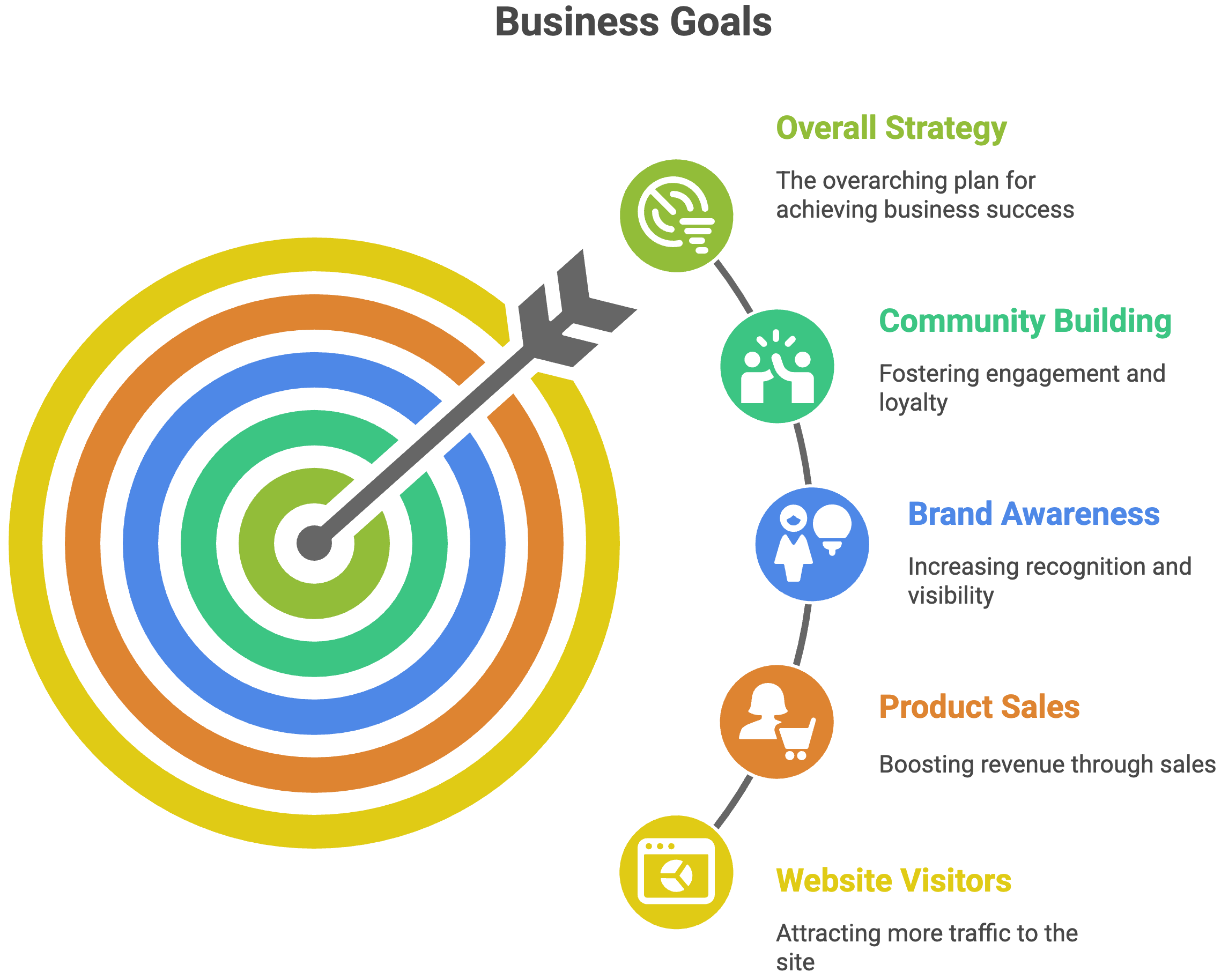
Example SMART goal: “I want to grow my email subscriber list from 0 to 1,000 in 6 months by publishing two SEO-optimised blog posts per week and promoting them on LinkedIn.”
3. Know Your Audience
You can have the best content in the world but if it’s reaching the wrong people, it won’t convert. Audience research is not optional; it’s the bedrock of every successful digital marketing strategy.
Ask yourself these questions:
- Who is my ideal customer? (age, profession, location, income level)
- What problems are they trying to solve?
- Where do they spend time online : Google, Instagram, LinkedIn, YouTube?
- What words or phrases do they type into search engines?
- What content format do they prefer; long-form blogs, short videos, or podcasts?
A practical way to do this is to build customer personas , semi-fictional profiles of your ideal buyers. Give them names, jobs, frustrations, and goals. The more specific you are, the more relevant and personal your marketing becomes.
🛠 Free tool: Use Google Trends, AnswerThePublic, or Reddit to find out exactly what your audience is searching for and talking about for free.
4. Build (or Optimise) Your Website — Your 24/7 Digital Salesperson
Your website is the most important asset in your entire digital marketing strategy. It’s your digital storefront, your portfolio, your customer service desk, and your sales funnel ; all in one. Every channel you invest in SEO, social media, email ultimately drives people back here.
Make sure your website is:
- Mobile-friendly: Over 60% of web traffic comes from smartphones in 2025. Google penalises sites that aren’t mobile-optimised.
- Fast: A one-second delay in page load time reduces conversions by 7%. Use Google PageSpeed Insights to test and fix this.
- Clear and navigable: Visitors should know within 5 seconds who you are, what you offer, and how to contact you.
- SEO-friendly: Optimise your page titles, meta descriptions, headings, and image alt texts for your target keywords.
- Secure (HTTPS): Google flags HTTP sites as ‘Not Secure’. HTTPS is a basic ranking signal.
- Built with conversion in mind: Every page should have a clear Call-to-Action (CTA) — ‘Get a Free Quote’, ‘Download the Guide’, ‘Book a Call’.
Even if you’re starting with a simple site on WordPress, Wix, or Squarespace, the principles above will put you ahead of most beginners.
5. Learn the Basics of SEO — The Most Valuable Long-Term Skill
Search Engine Optimisation (SEO) is the process of making your website rank higher on Google, organically, without paying for ads. Done right, SEO drives targeted, high-intent traffic to your site for months or years after you publish a single piece of content.
On-Page SEO (what’s on your website)
- Keyword research: Find the phrases your audience actually searches use Google Keyword Planner, Ubersuggest, or Ahrefs.
- Title tags and meta descriptions: Include your primary keyword naturally in the page title and meta description.
- Headings (H1, H2, H3): Structure your content with clear headings. Use keywords naturally — never stuff them.
- Internal linking: Link between your own blog posts and pages to help Google understand your site structure.
- Image optimisation: Add descriptive alt text to every image. Compress files to keep pages fast.
Off-Page SEO (what happens outside your website)
- Backlinks: Earn links from other reputable websites, this is the single biggest SEO ranking factor.
- Google Business Profile: Essential for local SEO. Claim and optimise your listing if you have a local business.
- Social signals: While not a direct ranking factor, social shares increase content visibility and often lead to backlinks.
Technical SEO
- Site speed: Use Google PageSpeed Insights to fix Core Web Vitals issues.
- XML sitemap: Submit your sitemap in Google Search Console so your pages get indexed faster.
- Structured data (Schema markup): Helps Google and AI search tools like SGE — understand and feature your content.
🔍 SEO for AI Search (2025 bonus): AI-powered search engines like Google SGE, ChatGPT Search, and Perplexity prefer content that is structured, trustworthy, and directly answers questions.
Writing in a clear Q&A format, using schema markup, and building topical authority all improve your chances of being cited by AI.
6. Choose Your Digital Marketing Channels Wisely
You don’t need to be everywhere. Spreading yourself too thin leads to mediocre results on every platform. Start with one or two channels that match your audience and goals, master them, then expand.
| Channel | Best For | Difficulty | Quick Tip |
| SEO (Search Engine Optimization) | Long-term organic traffic & visibility | Medium | Target long-tail keywords and write in-depth helpful content |
| Social Media Marketing | Brand awareness, engagement & community | Easy–Medium | Focus on 1–2 platforms where your audience spends time |
| Email Marketing | Nurturing leads & direct communication | Easy | Offer a free resource (checklist, guide) to grow your list fast |
| Google Ads / PPC | Instant targeted traffic & fast results | Medium–Hard | Start with a small daily budget; use exact-match keywords |
| Content Marketing | Authority, trust & organic search ranking | Medium | Publish consistent, helpful content that answers real questions |
| Influencer Marketing | Reach niche audiences quickly | Medium | Micro-influencers (10K–100K) often give better ROI |
| Video Marketing (YouTube) | Engagement, SEO & brand storytelling | Medium | Repurpose blogs into short videos — great for AI search too |
| Affiliate Marketing | Passive income & extended brand reach | Medium | Partner with creators who genuinely use and trust your produc |
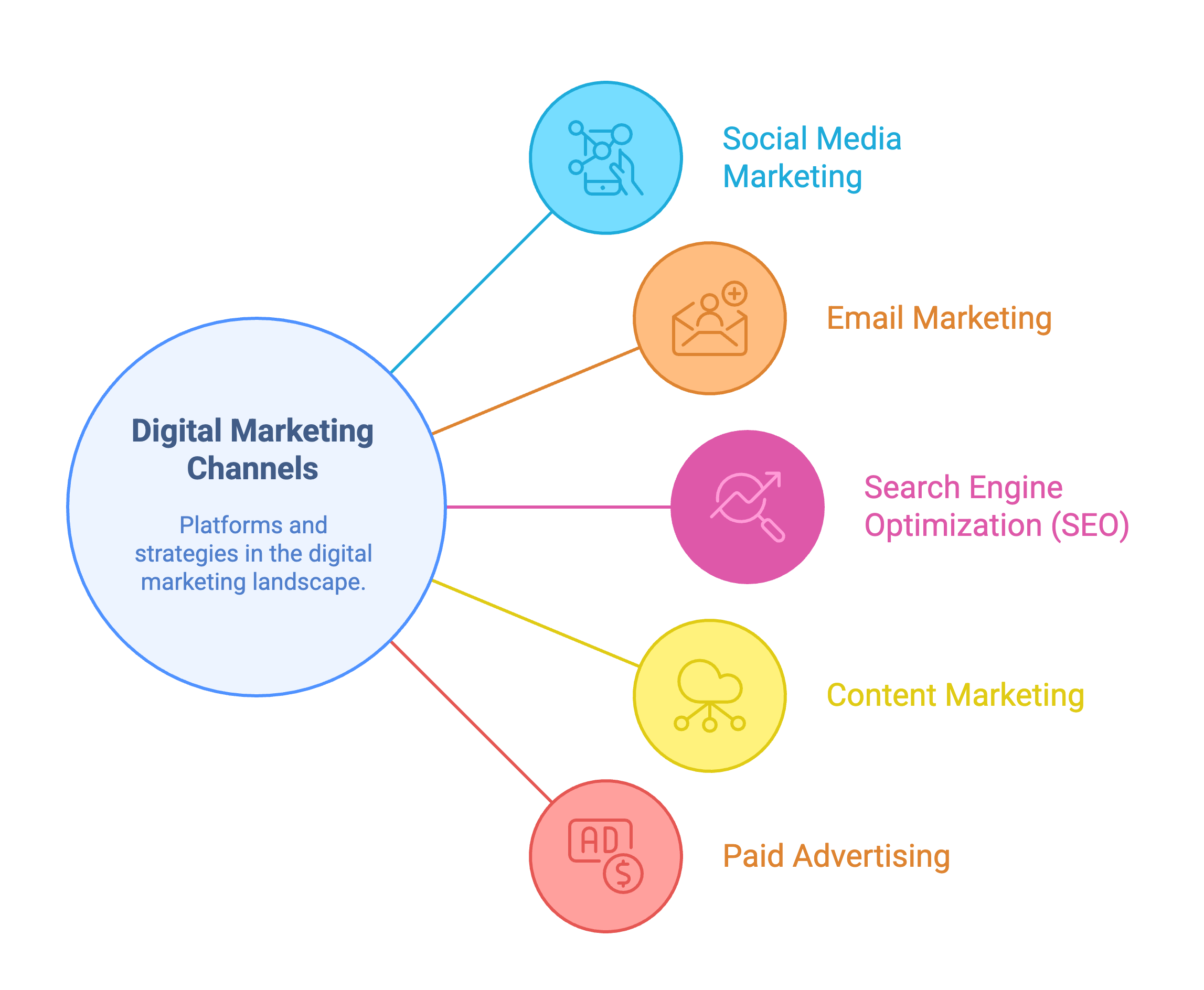
💡 Beginner tip: If you have a product or service people actively search for (plumber, accountant, SaaS tool), start with SEO + Google Ads. If you’re building a personal brand or community, start with social media + content marketing.
7. Create Content That Actually Helps People
Content marketing is the engine that powers every other channel. Great content builds trust, attracts search traffic, fills your email list, and gives social media audiences a reason to follow you. It’s the single highest-ROI activity for most beginners.
Types of content to create in 2025:
- Blog posts and articles: Long-form, SEO-optimised guides rank on Google and get shared. Aim for 1,500–2,500 words per post.
- Short-form video (Reels, TikTok, Shorts): The fastest-growing content format. Even beginner-quality video beats no video.
- Infographics and carousels: High shareability on LinkedIn and Instagram. Canva makes these beginner-friendly.
- Email newsletters: One of the highest-ROI formats, you own your list, unlike social media followers.
- Podcasts and audio content: Growing fast is great for building community and authority in a niche.
- Case studies and testimonials: The most persuasive content type for converting buyers.
- AI-assisted content: Use tools like ChatGPT, Claude, or Jasper to speed up first drafts — but always add your human voice and expertise.
The content golden rule:
“Create content that answers the exact questions your audience is already asking online. Every blog post, video, or post should make someone’s life easier, smarter, or better and only then should it mention your product or service.”
Consistency matters more than perfection. One helpful blog post every week beats a ‘viral’ attempt that fizzles and stops. Show up regularly; search engines and social media algorithms both reward it.
8. Start Building Your Email List From Day One
Email marketing delivers an average ROI of $36–$42 for every $1 spent — consistently outperforming social media, SEO, and paid ads in conversion rate. Your email list is also the one digital asset you truly own; a social media platform can change its algorithm overnight and wipe out your reach.
How to start building your email list:
- Choose a free email marketing tool : Mailchimp, Brevo, or ConvertKit all have generous free plans.
- Create a lead magnet : a free checklist, guide, template, or mini-course that your audience would genuinely want.
- Add a signup form to your website’s homepage, blog sidebar, and at the end of every blog post.
- Promote your lead magnet on social media and within your content.
- Send a consistent weekly or bi-weekly newsletter ; mix useful content with gentle product mentions.
📧 Email marketing tip: Personalise your emails using the subscriber’s first name and segment your list by interest. Personalised emails get 29% higher open rates and 41% more clicks.
9. Paid Advertising: When to Start Running Google Ads & Social Ads
Organic channels like SEO and content marketing take time to build momentum — typically 3–6 months. Paid advertising (PPC) gives you immediate, targeted visibility while you wait for organic growth to kick in.
Google Ads for Beginners
- Use Search campaigns to appear when people search your exact keywords.
- Start with a small daily budget (₹500–₹1,000 or $10–$20/day) to test which keywords convert.
- Use exact-match and phrase-match keywords to control your spend.
- Track conversions in Google Analytics before scaling your budget.
Meta Ads (Facebook & Instagram)
- Best for awareness and interest-based targeting (demographics, interests, behaviours).
- Use Retargeting Ads to re-engage people who visited your website but didn’t convert.
- Carousel and video ads typically outperform single-image ads in engagement.
- Test at least 2–3 ad creatives before scaling any campaign.
⚠️ Beginner mistake to avoid: Don’t run paid ads until your landing page is optimised for conversions. Sending paid traffic to a slow, unclear, or mobile-unfriendly page is money wasted.
10. AI in Digital Marketing — The 2025 Game Changer
Artificial intelligence is no longer a future concept — it’s already transforming how digital marketing works right now. As a beginner, embracing AI tools early gives you a significant competitive advantage.
How beginners can use AI in digital marketing today:
- Content creation: Use ChatGPT or Claude to generate blog outlines, email subject lines, ad copy, and social captions in minutes.
- SEO optimisation: AI tools like Surfer SEO or Clearscope analyse top-ranking content and tell you exactly what to include.
- Customer support: AI chatbots (Tidio, Intercom) handle FAQs 24/7, freeing you to focus on strategy.
- Image and video creation: Canva AI, Adobe Firefly, and Runway make visual content creation beginner-accessible.
- Analytics and insights: Google Analytics 4 and Meta Advantage+ use AI to surface the most important data patterns automatically.
- Personalisation: AI-powered email platforms tailor send times, subject lines, and content for each individual subscriber.
🤖 AI SEO tip: AI search engines like Google SGE, ChatGPT Search, and Perplexity tend to cite content that has clear structure, factual depth, and genuine author expertise.
Adding an ‘About the Author’ section, citing reputable sources, and using FAQ schema all increase your chances of appearing in AI-generated answers.
11. Best Free Digital Marketing Tools for Beginners in 2025
You don’t need a big budget to market effectively. Here are the top tools — most of which have excellent free plans — used by professional digital marketers every day:
| Tool | Category | Free Plan? | What It Does |
| Google Analytics 4 | Analytics & Tracking | Yes (free) | Tracks website traffic, user behaviour & conversions |
| Google Search Console | SEO | Yes (free) | Monitors search performance, keywords & indexing issues |
| Ubersuggest / Ahrefs | Keyword Research | Limited / Paid | Finds high-volume keywords & competitor backlinks |
| Canva | Graphic Design | Yes (free) | Creates social media posts, infographics & ads easily |
| Mailchimp / Brevo | Email Marketing | Yes (free) | Builds email lists, automates campaigns & tracks opens |
| Meta Business Suite | Social Media | Yes (free) | Manages Facebook & Instagram posts, ads & insights |
| Buffer / Hootsuite | Social Scheduling | Limited / Paid | Schedules posts across multiple platforms at once |
| ChatGPT / Claude AI | Content & Copywriting | Yes (free) | Drafts blogs, ad copy, captions & email content fast |
| SEMrush / Moz | SEO & Competitive Intel | Limited / Paid | Full SEO audit, rank tracking & content gap analysis |
| Hotjar | UX & Behaviour | Yes (free) | Shows heatmaps & recordings of how users browse your site |
12. Track, Measure & Improve — The Habit That Separates Beginners from Pros
The single biggest advantage digital marketing has over traditional marketing is that everything is measurable. Every click, every email open, every conversion — it’s all data you can use to improve.
Key metrics to track as a beginner:
- Website Traffic: How many people visit your site? Which pages are most popular? (Google Analytics 4)
- Traffic Sources: Where does your traffic come from — organic search, social, email, or paid ads?
- Bounce Rate: How many visitors leave after viewing just one page? High bounce rate = something’s not connecting.
- Conversion Rate: What % of visitors take the desired action (buy, sign up, contact)?
- Keyword Rankings: Which search terms is your site ranking for? (Google Search Console)
- Email Open Rate & CTR: Are people opening your emails and clicking your links? Benchmark: 20–30% open rate is good.
- Social Reach & Engagement Rate: How many people see your posts, and what % interact with them?
- Return on Ad Spend (ROAS): For paid campaigns, how much revenue do you earn per rupee/dollar spent?
Review your analytics at least once a week. Look for patterns: what content drives the most traffic? What ads convert best? What time of day do your emails get opened most? Then do more of what works and less of what doesn’t.
Your 30-Day Digital Marketing Starter Plan
Week 1 — Foundation
- Define your 3 SMART goals for the next 90 days.
- Identify your target audience and build one customer persona.
- Audit your existing website (speed, mobile, CTA, content gaps).
- Set up Google Analytics 4 and Google Search Console.
Week 2 — Content & SEO
- Do keyword research: find 10–20 target keywords using Ubersuggest or Google Keyword Planner.
- Publish your first SEO-optimised blog post (1,500+ words, target keyword in title, H1, and meta description).
- Choose one social media platform and create a business profile. Post 3 times this week.
- Sign up for a free email marketing tool (Mailchimp or Brevo) and create a lead magnet.
Week 3 — Launch & Promote
- Add your email signup form to your website and promote your lead magnet on social media.
- Write and publish your second blog post. Internally link it to your first.
- Repurpose your blog into 3 social media posts and 1 email newsletter.
- Engage actively: reply to every comment, message, and email you receive.
Week 4 — Review & Optimise
- Review your Google Analytics and Search Console data. What’s working?
- Identify your best-performing social post and create 2 more like it.
- Set up one retargeting ad campaign (even with a tiny budget) to recapture website visitors.
- Plan next month’s content calendar based on what your data tells you.
Frequently Asked Questions About Digital Marketing for Beginners
How long does it take to learn digital marketing?
You can learn the fundamentals in 4–8 weeks. Becoming truly skilled where you can run campaigns profitably, typically takes 6–12 months of active practice. The best way to learn is to do: start a project, run real campaigns, and study the results.
Do I need a digital marketing degree or certification?
No degree is required. Free certifications from Google (Google Digital Garage, Google Ads, Analytics), Meta Blueprint, HubSpot Academy, and Semrush Academy are widely respected and will teach you real, practical skills. Pair them with hands-on work on a real project or business.
Can I do digital marketing with no money?
Absolutely. SEO, content marketing, social media, and email marketing all have zero-cost starting points. Paid advertising (Google Ads, Meta Ads) does require a budget but you can start with as little as ₹300–₹500 per day ($5–$10) to test and learn before scaling.
What’s the best digital marketing channel for beginners?
It depends on your goal. For fast brand building: Instagram or LinkedIn. For long-term traffic: SEO and content marketing. For immediate results: Google Ads or Meta Ads. For highest ROI: email marketing. If in doubt, start with SEO, the skills transfer to every other channel.
How do I measure if my digital marketing is working?
Set up Google Analytics 4 and Google Search Console, both free. Track the metrics that map directly to your goals: traffic for awareness, conversion rate for sales, email open rates for newsletters, and ROAS for paid campaigns. Review weekly, adjust monthly.
Is AI replacing digital marketers?
No — but marketers who use AI are replacing those who don’t. AI tools dramatically accelerate content creation, keyword research, and data analysis. The human skills that remain essential are strategy, creativity, brand voice, and genuine audience understanding. Learn AI tools early; they’re a competitive edge, not a threat.
Final Words: Every Expert Was Once a Beginner
Digital marketing is not a sprint; it’s a compounding skill. The blog post you publish today might start ranking on Google six months from now. The email list you start building this week will be a major revenue driver next year. The brand you build consistently over 12 months will be something competitors can’t copy overnight.
The most important thing you can do right now? Take the first step. Today. Set up your website. Write your first blog post. Send your first email. Open a Google Analytics account. Don’t wait until you know everything you learn by doing.
The brands that win online aren’t necessarily the biggest or the best-funded. They’re the ones that show up consistently, genuinely help their audience, and adapt when the data tells them to. That can absolutely be you.
Happy Marketing! 🚀